Google Gemini 4 Carbon: Powerful AI for Cyber Defense

Gemini 4 Carbon: Google’s Strongest AI Model Targets Cyber Defense and Complex Engineering
Google’s latest frontier model combines stronger security benchmarks with the ability to work through lengthy engineering tasks. It’s rollout starts with selected cyber defenders.
Google announced Gemini4 Carbon on October 28, 2026, describing it as its strongest AI model yet. Built on Gemini 4 Argon, Carbon focuses on cybersecurity, coding, and long-horizon tasks: work that requires an AI system to plan, investigate, and keep making progress across multiple steps.
The announcement raises an interesting question for IT teams. How much of the work between discovering software flaw a software flaw and delivering a reliable fix could an AI agent help handle?
Gemini 4 Carbon focuses on cybersecurity and sustained engineering workflows. Image: Google
Strong Results Across the Security Workflow
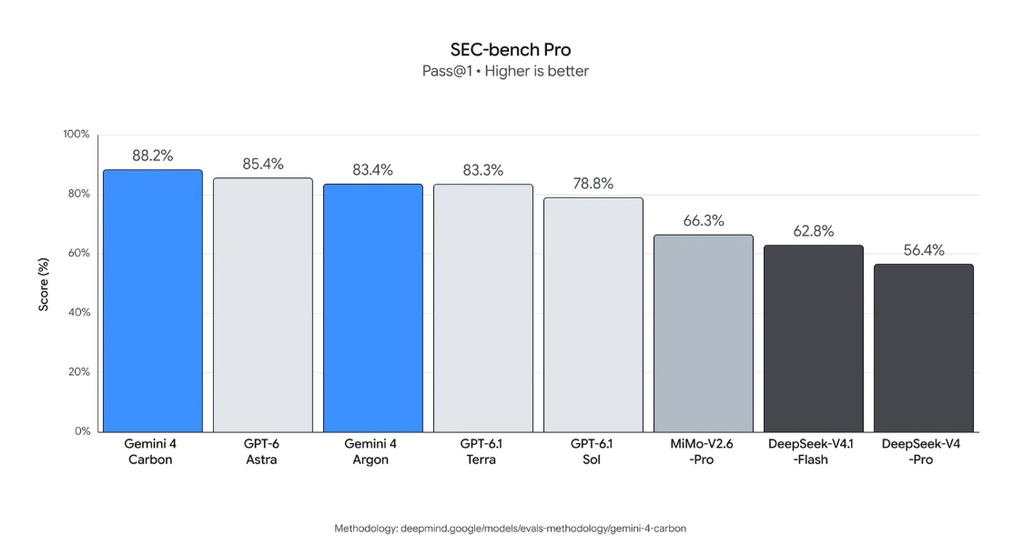
Google reports improvements in three areas of cybersecurity, finding vulnerabilities, establishing whether they can be exploited, and fixing their underlying causes.
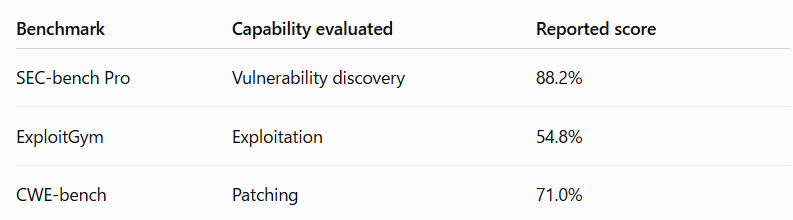
Benchmark results
Together, these tasks represent an important part of defensive security work. Finding a potential flaw is only the beginning. Security teams also need to understand its practical impact and develop a fix that addresses the actual problem.
Google’s announcement notes that these cybersecurity benchmark evaluations were conducted without guardrails. The results therefore need to be read in that testing context, rather than treated as a promise about every deployed configuration.
An AI Agent That Can Keep Working
Carbon’s other major focus is sustained engineering work.
According to Google, internal teams have used it on tasks lasting several days, including investigating subtle bugs in large codebases and low-level systems. These problems often involve failed hypotheses, repeated tests, and changes of direction before a useful solution emerges.
For developers, the potential value is in maintaining progress through that process. An assistant that can explain an error is useful; an agent that can investigate the cause, propose a patch, and help validate it could take on a larger share of the workflow.
Google also reports improvements in secure code generation and fewer alignment problems and fabricated claims in its internal coding environments. These remain company-reported findings, and practical value will depend on how the model performs with a team’s own repositories and tools.
What the Independent Rankings Show
Artificial Analysis placed Gemini 4 Carbon first on its Intelligence Index v5 at launch, with a score of 59. Its evaluation also found substantial coding improvements, while placing Carbon behind Claude Opus 5.5 on its Coding Agent Index.
That distinction matters. A leading overall score does not mean a model wins every tasks. Teams choosing an AI assistant should still evaluate it against their own workload, including code quality, response time, and the amount of human review required.
Access Begins With Cyber Defenders
Google is introducing Carbon through a controlled rollout, initially providing access to selected cyber defenders and expanding to trusted partners through its Fairwind Program.
The company also says it is participating in the US government’s voluntary process for pre-release model testing. Its announcement does not give a firm date for broad availability.
The approach reflects a practical challenge: capabilities that help defenders discover and validate vulnerabilities can also have offensive uses.
Pricing: The Introductory Rate Has a Footnote
Carbon’s announced introductory API pricing matches Argon’s.
| Token type | Introductory price per million tokens | Price after the introductory period |
|---|---|---|
| Input | $2 | $4 |
| Output | $10 | $20 |
Cached input tokens receive a 95% discount against the applicable input rate. Google has not specified when the introductory period will end.
For teams budgeting for extended agent workflows, that distinction matters. A task involving repeated investigation and testing may consume substantially more tokens than a short chat exchange.
Carbon offers a promising direction for AI-assisted security and engineering. The next test is whether its benchmark gains translate into dependable fixes and useful progress on real projects.
Editorial Resources
Official and Evaluation Links
- Google: Introducing Gemini 4 Carbon — primary announcement, images, benchmark details, rollout, and pricing footnote.
- Google DeepMind: Fairwind Program — program details and access information.
- Artificial Analysis: Carbon launch evaluation — independent results and comparison charts.
- Artificial Analysis: Carbon model page — model metrics and standard pricing.
- Impress Watch: Japanese report — the source article supplied for this draft.
X Links
Individual announcement posts could not be verified. The following are search links, not confirmed post URLs:
- Search Google DeepMind posts mentioning Carbon
- Search Google posts mentioning Carbon
- Search Artificial Analysis posts mentioning Carbon
Suggested embed position: After the opening paragraph, if a relevant official announcement post is found. Embed the individual post rather than the search page.
Image Preparation
The three image placements above are optional editorial instructions; remove them before publication. Use the original source pages to locate full-resolution assets and check their reuse terms. Credit the relevant source.
The image links supplied with the Japanese article are also useful references:
- Hero image reference
- SEC-bench Pro chart reference
- ExploitGym chart reference
- CWE-bench chart reference



